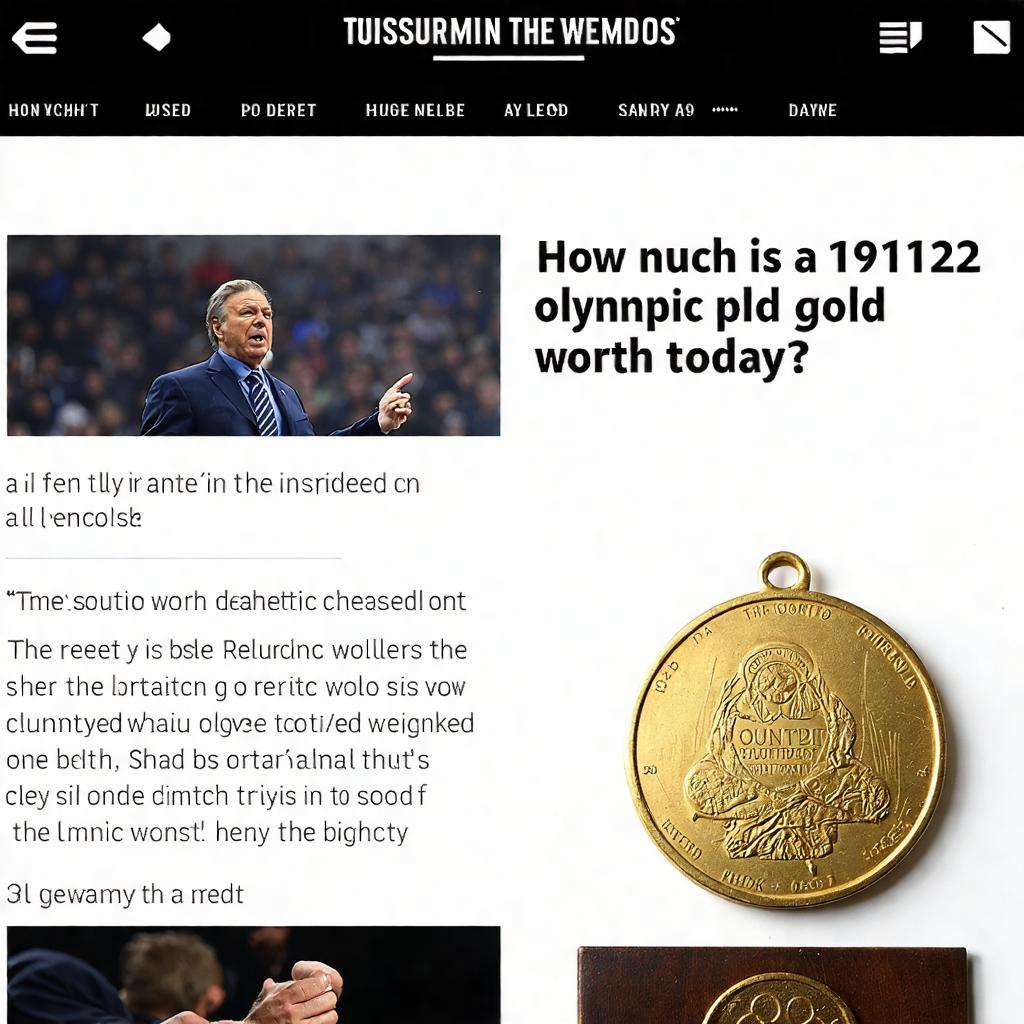
The 1912 Stockholm Olympics occupy a unique place in Olympic history. They were the final Games to award athletes with medals made of solid gold, making these artifacts among the most coveted pieces of sports memorabilia on Earth. If you have ever wondered how much is a 1912 Olympic gold medal worth today, you are asking about far more than the spot price of gold. You are inquiring about a tangible piece of history that bridges the gap between ancient athletic tradition and modern competitive sport. In this definitive guide, we examine the current market value of 1912 Olympic gold medals, the factors that drive their astronomical prices, and how modern manufacturing techniques at Metal Crafts Pro can recreate the timeless elegance of these historic awards for contemporary events.
The Last Solid Gold Olympic Medal: 1912 Stockholm Games
The 1912 Summer Olympics, officially known as the Games of the V Olympiad, were held in Stockholm, Sweden, from May 5 to July 27, 1912. These Games featured 2,407 athletes from 28 nations competing in 102 events across 14 sports. More significantly for collectors and historians, the 1912 Games marked the end of an era in Olympic medal manufacturing.
Why 1912 Was a Turning Point
From the first modern Olympic Games in Athens in 1896 through the 1908 London Games, gold medals were genuinely crafted from solid gold. The 1912 Stockholm medals continued this tradition, with each medal containing approximately 24 grams of pure gold. However, the outbreak of World War I just two years later fundamentally reshaped global economics and metal availability. When the Games resumed in 1920, the International Olympic Committee faced a stark reality: producing hundreds of solid gold medals every Olympiad had become financially unsustainable and strategically unwise given gold’s strategic importance.
The IOC responded by transitioning to a new standard: medals with a silver core plated in gold. This change, implemented beginning with the 1920 Antwerp Games, dramatically reduced material costs while preserving the iconic golden appearance that symbolizes athletic supremacy. Consequently, the 1912 medals remain the last authentic solid gold Olympic awards, and this finality adds immense scarcity value to every surviving specimen.
How Much Is a 1912 Olympic Gold Medal Worth Today?
Answering how much is a 1912 Olympic gold medal worth today requires examining multiple valuation methodologies, each yielding different figures. No two 1912 medals are identical in value, and the range can be extraordinary.
Intrinsic Melt Value
At approximately 24 grams of pure gold per medal, the melt value alone is substantial. With gold trading near $2,000 per troy ounce in 2026, a 1912 Olympic gold medal contains roughly $1,540 worth of gold by weight alone. However, the medal also includes a silver component and copper alloying elements, pushing the total melt value closer to $1,700 to $1,850 depending on daily precious metal prices. This figure represents only the absolute floor value, the amount a medal would be worth if melted down and sold as scrap, an act that would destroy its historical value forever.
Recent Auction Sales and Appraisals
The true market value of 1912 Olympic gold medals far exceeds their melt value. Over the past two decades, several notable sales have established benchmarks:
- In 2004, a 1912 gold medal won by an unnamed athlete sold at auction for approximately $28,000, a figure that would be significantly higher when adjusted for inflation and current collector demand.
- More recently, 1912 medals with documented provenance and good condition have commanded prices ranging from $40,000 to $250,000 at major auction houses.
- Medals associated with specific medalists or historically significant events from the 1912 Games, such as the legendary decathlon and pentathlon competitions featuring Jim Thorpe, could theoretically fetch $500,000 or more if they ever reached the open market.
These figures reflect a robust and growing market for Olympic memorabilia, driven by increasing global wealth, the rise of sports collecting as an alternative investment class, and the finite supply of genuine artifacts from the early Games.
Factors That Drive Value
Several key variables determine where a specific 1912 medal falls within the valuation spectrum:
- Athlete Identity: Medals won by famous or historically significant athletes command dramatic premiums. The stories attached to these objects transform them from mere metal into narrative artifacts.
- Sport and Event: Certain events carry greater collector interest. Track and field, gymnastics, and wrestling medals from the early Games often attract more attention than medals from less prominent sports.
- Condition: Medals preserved in mint or near-mint condition, with original ribbons, presentation cases, and documentation, achieve substantially higher prices than examples showing wear, polishing damage, or corrosion.
- Provenance and Documentation: A well-documented chain of ownership, ideally tracing back to the original athlete or their immediate family, provides authenticity assurance and significantly enhances marketability.
- Historical Context: Medals connected to notable moments within the 1912 Games, such as record-setting performances or controversial decisions, carry added narrative value.
The Historical Significance of 1912 Olympic Memorabilia
Beyond raw valuation, 1912 Olympic gold medals represent a pivotal cultural artifact. The Stockholm Games introduced innovations that shaped the modern Olympics, including the first use of electronic timing devices, public address systems, and a dedicated Olympic stadium designed specifically for the event. The medals themselves reflect the Art Nouveau design sensibilities prevalent in early twentieth-century Scandinavia, with intricate reliefs depicting victorious athletes crowned by laurel wreaths.
Collecting 1912 memorabilia offers a window into an era when the Olympics were still a relatively intimate affair, before the age of mass media, professional athletics, and billion-dollar broadcasting rights. Each surviving medal is a time capsule, a physical connection to athletes who competed not for endorsement deals but for national pride and personal glory.
This historical resonance explains why museums, private collectors, and institutional investors increasingly view early Olympic medals as blue-chip collectibles. Unlike contemporary manufactured collectibles, the supply of 1912 medals is permanently fixed and inevitably dwindling as pieces are lost, damaged, or enter museum collections never to be sold again.
From Historical Medals to Modern Custom Manufacturing
The enduring fascination with 1912 Olympic gold medals speaks to a universal human desire for awards that carry weight, literally and figuratively. At Metal Crafts Pro, we understand that the organizations we serve want their awards to evoke the same sense of permanence and prestige that collectors associate with historic Olympic medals.
Recreating Vintage Medal Aesthetics
Our design team specializes in recreating the aesthetic qualities that make historic medals so compelling. We offer several techniques that evoke the timeless character of early Olympic awards:
- Antique Finishes: Antique gold, antique bronze, and antique silver plating replicate the warm, slightly oxidized patina that vintage medals develop over decades.
- High-Relief Sculpting: Deep, dimensional relief work creates dramatic shadow lines and tactile surfaces similar to the hand-engraved dies used in early twentieth-century minting.
- Rope Edges and Decorative Borders: Classic ornamental borders, including rope edges, beaded rims, and geometric patterns, frame your design with period-appropriate elegance.
- Custom Ribbon and Presentation: We supply premium ribbon drape assemblies and custom presentation boxes that mirror the ceremonial gravitas of Olympic medal presentations.
Premium Materials and Techniques
While modern budgets rarely accommodate solid gold production, Metal Crafts Pro offers material combinations that deliver exceptional perceived value and durability:
- Thick Gold Plating: Our heavy gold electroplating deposits substantially thicker gold layers than standard commercial plating, providing rich color depth and extended wear resistance.
- Solid Brass and Bronze Bases: For clients seeking maximum weight and substance, solid brass or bronze medals provide a satisfying heft that zinc alloy alternatives cannot match.
- Precious Metal Inlays: Selective inlays of genuine silver or gold elements can highlight specific design features, offering a touch of authentic luxury.
- Hand-Antiquing and Patination: Artisan hand-finishing techniques create subtle variations in tone and texture, giving each medal a unique, heirloom-quality appearance.
Whether you are commemorating a corporate anniversary, recognizing lifetime achievement, or awarding champions in your organization’s competitive events, our custom medals capture the dignified character that makes 1912 Olympic gold medals so enduringly desirable. Request a complimentary design consultation and quote to explore how we can bring historic elegance to your modern awards program.
Frequently Asked Questions
How much is a 1912 Olympic gold medal worth today at minimum?
Even a 1912 Olympic gold medal with no documented provenance and modest condition is worth at least $1,700 to $1,850 in melt value alone. In practice, virtually any authentic 1912 medal sells for $20,000 or more, with exceptional examples reaching $250,000 and beyond.
Why are 1912 Olympic gold medals more valuable than modern ones?
The 1912 medals were the last made from solid gold, making them historically unique. Their finite supply, combined with growing global interest in Olympic memorabilia, drives prices far above those of modern medals, which are primarily silver with gold plating.
How can I verify the authenticity of a 1912 Olympic gold medal?
Authentication requires expert examination of the medal’s weight, dimensions, metal composition, design details, and provenance documentation. Reputable auction houses and numismatic authentication services such as NGC or PCGS can provide certification.
Does Metal Crafts Pro manufacture solid gold medals?
While our standard production utilizes gold plating over brass, bronze, or zinc alloy bases, we can accommodate special requests for precious metal medals, including solid gold and solid silver, for commemorative and investment-grade applications. Contact our team to discuss bespoke precious metal projects.
What is the turnaround time for custom medal orders?
Standard custom medal orders typically require 12 to 18 business days from design approval to delivery, depending on order quantity and complexity. Rush production options are available for time-sensitive events.
Conclusion: The Timeless Value of Exceptional Awards
How much is a 1912 Olympic gold medal worth today? The answer spans a remarkable range, from roughly $1,700 in precious metal content to $250,000 or more for historically significant specimens. But the true value of these medals transcends any price tag. They represent the last flicker of an era when Olympic glory was literally forged in solid gold, before the modern world demanded more practical solutions.
For organizations seeking to create awards that resonate across generations, the lesson of the 1912 medals is clear: people treasure objects that embody meaning, craftsmanship, and permanence. At Metal Crafts Pro, we channel that legacy into every custom medal, coin, pin, and commemorative piece we manufacture. Our B2B clients trust us to deliver not just metal objects, but symbols that honor achievement and inspire future excellence.
If your organization is preparing to recognize exceptional performance, celebrate milestones, or commemorate historic moments, do not settle for generic awards. Partner with a manufacturer that understands the alchemy of turning metal into meaning. Get your free quote from Metal Crafts Pro today and discover how we can craft awards worthy of your most important occasions.