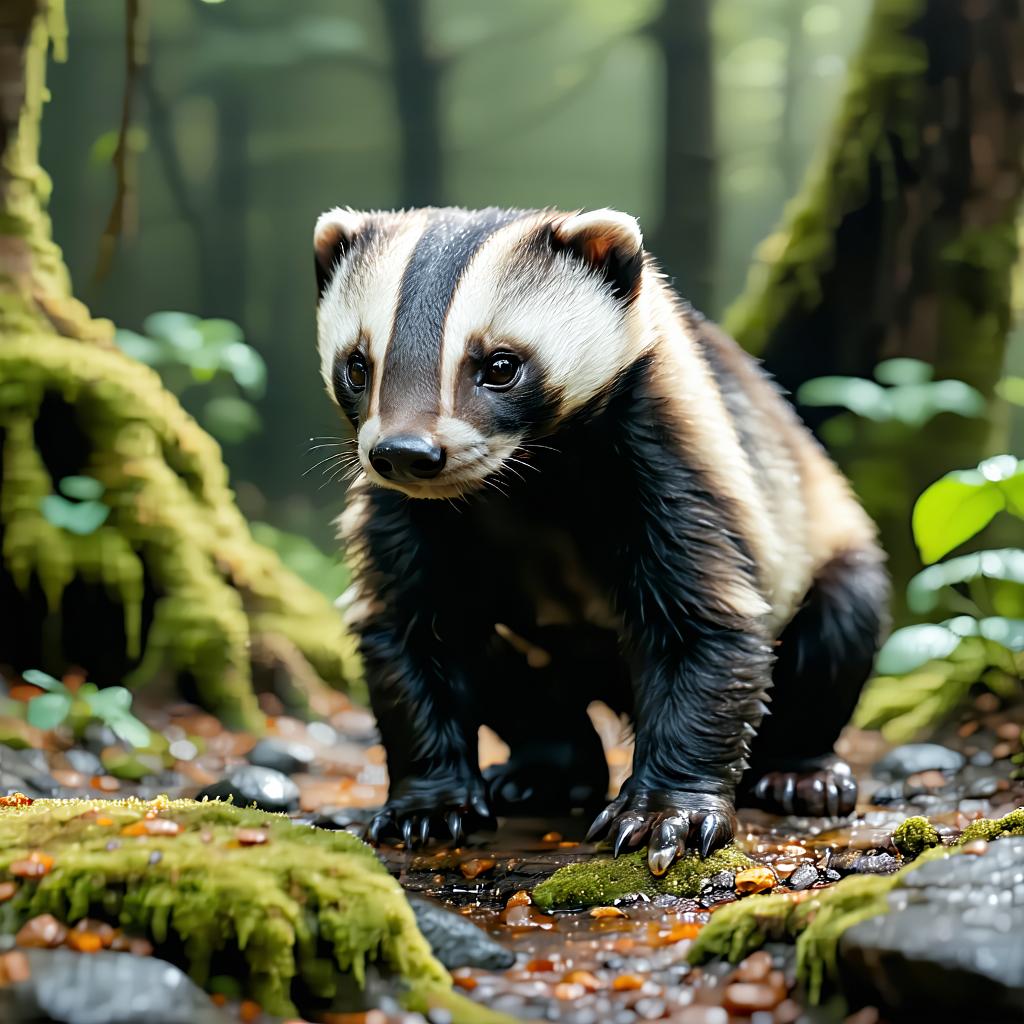
I’ll never forget the first time I laid eyes on a honey badger. With its distinct markings and fearless attitude, this small but mighty creature is truly a sight to behold. But what exactly does a honey badger look like? In this article, we’ll explore the physical characteristics that make this unique animal stand out in the animal kingdom. So, buckle up and get ready for a wild ride as we uncover the appearance of the elusive honey badger.
Introduction: Unveiling the Appearance of the Feared and Fierce Honey Badger
Curious about what a honey badger looks like? Let’s delve into the appearance of these fascinating creatures that have earned a reputation for their fearless nature.
Physical Characteristics:
- Compact and muscular body
- Thick,coarse fur ranging from gray to black
- Distinctive white or light-colored stripe running from the head to the tail
- Sharp claws for digging and climbing
Facial Features:
- Small,rounded ears
- Powerful jaws and teeth
- Intense,dark eyes
- Prominent snout for sniffing out food
Distinctive Physical Features: Understanding the Anatomy of a Honey Badger
The honey badger,also known as the “ratel,” is a fascinating creature with a unique set of physical features that set it apart from other animals.One of the most distinctive characteristics of a honey badger is its thick, loose skin, which allows it to twist and turn freely within its own skin when grabbed by a predator. This adaptability makes it incredibly difficult for larger animals to get a good grip on the honey badger, increasing its chances of survival in the wild.
In addition to its flexible skin, the honey badger is also known for its powerful jaws and sharp teeth, which it uses to crush bones and tear through tough prey. Its strong claws are perfect for digging and excavating food, while its keen sense of smell helps it locate buried prey. With a stocky build and a short, sturdy tail, the honey badger may not look like much at first glance, but its unique anatomy is perfectly adapted for its rugged lifestyle in the wild.
Coloration and Coat: Identifying the Unique Characteristics of a Honey Badger’s Fur
In the wild, honey badgers are known for their distinctive coat that helps them blend into their natural habitat. Their fur varies in coloration,ranging from a light grey to a dark black,with a signature white stripe running from their head to the base of their tail. This unique feature helps them camouflage themselves in the grasslands and forests where they are commonly found.
The fur of a honey badger is not only for camouflage but also serves as a form of protection.Their coarse fur is resistant to snake bites and helps shield them from thorns and sharp objects as they move through their rugged terrain. Despite their small size, honey badgers are fearless creatures with a tough exterior to match, making their coat a vital part of their survival in the wild.
Facial Features and Body Structure: Examining the Intriguing Traits of a Honey Badger
When it comes to the facial features and body structure of a honey badger, there are several intriguing traits that set this animal apart from others in the animal kingdom. Let’s take a closer look at what makes a honey badger so unique:
- Sharp Claws: One of the most defining features of a honey badger is its sharp claws, which are perfect for digging and hunting for food.
- thick, Tough Skin: Honey badgers have incredibly thick and tough skin, making them resilient to bites and stings from predators.
- Distinctive Facial Stripe: These feisty creatures sport a characteristic black stripe running from the top of their head down to their neck, giving them a bold and distinctive appearance.
Additionally, honey badgers have a stocky body structure with short legs and a strong, muscular build. Their compact bodies allow them to move swiftly and efficiently through their natural habitats, making them formidable predators in the wild.With their unique combination of facial features and body structure, honey badgers are truly fascinating creatures to observe in the wild.
Q&A
Q: What does a honey badger look like?
A: Honey badgers are small, stocky mammals with a distinct black coat and a white stripe that runs from their head to the base of their tail.
Q: Do honey badgers have any unique physical features?
A: Yes, honey badgers have a thick and loose, rubbery skin that allows them to twist and turn freely when attacked. They also have strong claws and a powerful jaw for digging and breaking into termite mounds.
Q: How big are honey badgers?
A: Honey badgers typically range in size from 7 to 12 inches in height and can weigh anywhere from 10 to 30 pounds, depending on their age and gender.Q: Are honey badgers related to other animals?
A: Honey badgers are part of the Mustelidae family, which includes weasels, otters, and wolverines. They are known for their fearlessness and aggression, earning them the title of the “world’s most fearless animal”.Q: What habitats do honey badgers typically live in?
A: Honey badgers are found in a variety of habitats, including savannas, woodlands, and deserts. They are highly adaptable and can thrive in both arid and more lush environments.
Q: Do honey badgers have any predators?
A: Despite their tough exterior, honey badgers can still fall prey to larger predators like lions, spotted hyenas, and leopards. Though, their fierce nature and defensive capabilities make them a formidable opponent.
the Conclusion
the honey badger is a remarkable creature with unique physical characteristics that make it stand out in the animal kingdom. from its thick fur and distinctive black and white markings to its robust build and sharp claws, the honey badger is truly a force to be reckoned with in the wild. So, the next time you come across one of these fearless animals, take a moment to admire its rugged beauty and marvel at nature’s incredible diversity. And remember, despite their small size, honey badgers command respect wherever they go. Stay curious, stay wild, and stay tuned for more fascinating insights into the wonders of the animal world.