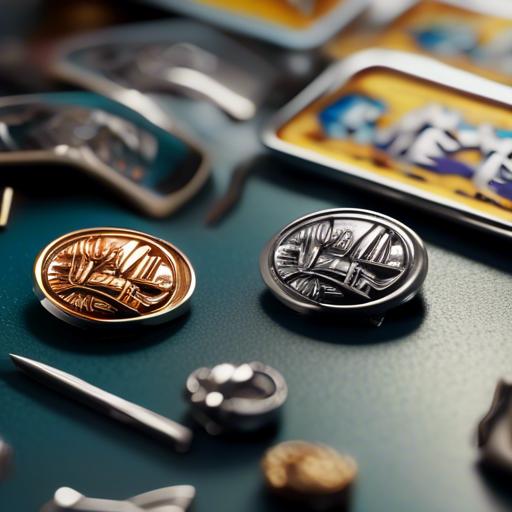
Metal lapel pins are one of the most versatile accessories for branding, recognition, and personal expression. Whether you want to create a custom pin for your company, design merchandise for an event, or simply explore the craft as a hobby, understanding how to make metal lapel pins is the essential first step.
While it is entirely possible to make simple metal lapel pins at home, professional-grade pins require specialized equipment, precise craftsmanship, and industrial finishing processes. In this guide, we will walk you through both paths — the DIY approach for beginners and the professional manufacturing process that businesses rely on for high-quality, durable results.
Understanding Metal Lapel Pins: Types and Materials
Before you start making metal lapel pins, it is important to understand the different types and materials available. The method you choose will depend on your design complexity, budget, and intended use.
Common Types of Metal Lapel Pins
- Soft Enamel Pins: The most popular type. The enamel is recessed below the metal edges, creating a textured feel. Ideal for detailed artwork and vibrant colors.
- Hard Enamel Pins: The enamel is polished flat with the metal surface, creating a smooth, jewelry-like finish. More durable and premium-looking than soft enamel.
- Die-Struck Pins: Made by stamping a metal blank with a custom die. These can be left with a natural metal finish or plated with gold, silver, or antique bronze.
- 3D Cast Pins: Created through a casting process that allows for raised and recessed areas in three dimensions. Perfect for complex shapes like logos with depth.
- Printed Pins: Using offset printing or UV printing directly onto a metal base. Best for designs with gradients, photographs, or extremely fine details that enamel cannot replicate.
Common Materials Used
- Iron: Budget-friendly and durable. Often used for soft enamel and printed pins.
- Zinc Alloy: Excellent for complex shapes and 3D designs. Offers a good balance of cost and quality.
- Brass / Copper: Premium materials with a heavier feel. Ideal for die-struck and hard enamel pins.
- Stainless Steel: Highly durable and corrosion-resistant. Often used for printed and etched designs.
How to Make Metal Lapel Pins at Home: The DIY Method
If you are a hobbyist or want to experiment with a small batch of handmade pins, here is a simplified overview of the DIY process.
Materials You Will Need
- Metal blanks (brass or copper sheets, pre-cut or hand-cut)
- Enamel paints or resin colorants
- Jewelry pliers and metal files
- Pin backs with adhesive or soldering equipment
- Clear epoxy resin or a UV protective coating
- Design templates printed on transfer paper
Basic DIY Steps
- Design your artwork: Create a simple design using vector software or hand-draw it. Keep details minimal — fine lines are difficult to achieve without professional stamping equipment.
- Transfer the design: Print or draw your design onto the metal blank. If you have access to a laser engraver or CNC machine, you can etch the design directly.
- Add color: Carefully fill recessed areas with enamel paint or colored resin. A fine-tipped brush and steady hand are essential.
- Cure the paint: Depending on the enamel type, you may need to air-dry for 24–48 hours or bake the pins in an oven at a low temperature.
- Apply a protective coat: Seal the finished pin with clear epoxy resin or a spray lacquer to protect against scratches and fading.
- Attach the pin back: Use a strong jewelry adhesive or solder the butterfly clutch or rubber clutch backing onto the rear of the pin.
The Reality of DIY Pin Making
While making metal lapel pins at home can be a satisfying craft project, there are significant limitations:
- Precision: Achieving clean, consistent lines without a die or mold is extremely difficult.
- Durability: Hand-applied enamel and DIY coatings often chip, fade, or wear down faster than factory finishes.
- Quantity: Making more than a handful of identical pins by hand is incredibly time-consuming.
- Cost per unit: For small batches, material waste and trial-and-error can make DIY pins surprisingly expensive.
If you need professional-quality pins in quantities of 50 or more, working with a specialized lapel pin manufacturer is almost always the better choice.
How Professional Lapel Pins Are Manufactured
Professional metal lapel pin manufacturing follows a refined, multi-step process that ensures consistency, durability, and visual impact. Understanding this process helps you communicate effectively with a manufacturer and make informed design decisions.
Step 1: Design and Vector Preparation
The design is converted into a vector file with clearly defined color zones and metal outlines. Manufacturers typically require Pantone color codes to ensure color accuracy across batches.
Step 2: Die Creation or Mold Making
For die-struck and enamel pins, a custom steel die is carved based on the design. For 3D cast pins, a mold is created instead. This is the most critical step for detail accuracy.
Step 3: Metal Stamping or Casting
The die is pressed into a metal sheet with extreme force (often several tons) to create the raised and recessed areas of the pin shape. For cast pins, molten metal is injected into the mold.
Step 4: Plating and Polishing
The stamped metal pieces are electroplated with the desired finish — such as gold, silver, nickel, black nickel, or antique bronze. They are then polished to achieve the correct surface texture.
Step 5: Enamel Filling and Baking
For enamel pins, colored enamel paste is carefully injected into the recessed areas. The pins are then baked at high temperatures to harden the enamel. Hard enamel pins receive additional polishing after baking.
Step 6: Quality Control and Assembly
Each pin is inspected for color accuracy, plating consistency, and structural integrity. Approved pins are fitted with clutch backs, magnetic backs, or safety pins depending on the order specifications.
Why Businesses Choose Professional Lapel Pin Manufacturers
Organizations, companies, and event planners rarely attempt DIY pin production for good reason. Professional manufacturing offers advantages that are impossible to replicate at home:
- Scalability: Order anywhere from 100 to 100,000+ units with identical quality.
- Cost efficiency: Bulk production dramatically lowers the per-unit cost.
- Material variety: Access to premium metals, custom plating, and specialized finishes.
- Design fidelity: Professional dies and printing technology reproduce even the finest design details.
- Structural durability: Industrial-grade enamel, plating, and adhesives ensure years of wear.
- Time savings: What might take you weeks by hand can be produced in days at a factory.
At Metal Crafts Pro, we specialize in manufacturing custom metal lapel pins for businesses, nonprofits, government agencies, and events worldwide. Whether you need soft enamel pins for a product launch or hard enamel pins for employee recognition, we manage the entire process from design review to delivery.
Design Tips for Custom Metal Lapel Pins
If you are preparing artwork for professional production, follow these guidelines to ensure the best results:
- Keep lines thick: Minimum line thickness should be 0.3mm for enamel pins to prevent bleeding or breakage.
- Limit fine text: Text smaller than 5pt may not be legible once stamped or printed at pin size.
- Use solid colors: Avoid gradients unless you are ordering offset-printed pins. Enamel is applied as solid Pantone colors.
- Consider metal finishes: The exposed metal areas of your design will show the plating color. Use this as part of your design aesthetic.
- Choose the right size: Most lapel pins range from 0.75 to 1.5 inches. Larger pins allow more detail but may be too heavy for lightweight fabrics.
How Much Do Custom Metal Lapel Pins Cost?
Pricing depends on several factors:
- Quantity: Higher quantities reduce the per-unit cost significantly.
- Size: Larger pins require more material and enamel.
- Type: Hard enamel and 3D cast pins are typically more expensive than soft enamel or printed pins.
- Plating: Standard plating (gold, silver, nickel) is usually included. Specialty finishes like rainbow plating or dual plating may add cost.
- Extras: Backing cards, custom packaging, or premium clutch types (magnetic, deluxe) affect the final price.
For a typical soft enamel pin order of 100 pieces, pricing is very competitive and scales favorably for larger volumes. Contact us for a detailed quote tailored to your specific design and requirements.
Frequently Asked Questions
Can I make metal lapel pins at home without special equipment?
You can create simple, hand-crafted pins using metal blanks, enamel paint, and basic jewelry tools. However, achieving professional consistency and durability without a die-stamping press or casting equipment is extremely difficult.
What is the minimum order quantity for custom lapel pins?
At Metal Crafts Pro, we offer flexible minimum order quantities to accommodate both small businesses and large organizations. Typical minimums start at 100 pieces for most pin types.
How long does it take to manufacture custom lapel pins?
Standard production time ranges from 2 to 4 weeks depending on design complexity, order size, and finishing requirements. Rush orders can often be accommodated upon request.
What is the difference between soft enamel and hard enamel pins?
Soft enamel pins have recessed enamel that creates a textured surface you can feel. Hard enamel pins are polished completely flat, giving them a smooth, premium feel similar to jewelry. Hard enamel is also more scratch-resistant.
Can I use my own artwork for custom pin production?
Yes. We accept designs in vector formats such as AI, EPS, PDF, and SVG. If you only have a raster image (PNG, JPG), our design team can convert it into a production-ready vector file.
What backing options are available for lapel pins?
Standard options include the butterfly clutch, rubber clutch, safety pin, and magnetic backing. Magnetic backings are popular for delicate fabrics, while butterfly clutches are the most common choice for everyday wear.
Conclusion
Learning how to make metal lapel pins gives you valuable insight into the materials, design principles, and production techniques behind this timeless accessory. For hobbyists and crafters, the DIY approach offers a fun and creative outlet. For businesses and organizations, however, partnering with an experienced manufacturer ensures you receive consistent, high-quality pins that represent your brand with professionalism and pride.
If you are ready to turn your lapel pin design into a finished product, Metal Crafts Pro is here to help. From material selection and plating advice to final delivery, we guide you through every step of the manufacturing process.
—
Ready to Manufacture Your Custom Lapel Pins?
Metal Crafts Pro produces premium custom metal lapel pins for clients worldwide. We offer:
- Free design consultation and vector conversion
- Flexible minimum order quantities
- Full range of materials, platings, and finishes
- Competitive wholesale pricing
- Fast global shipping