
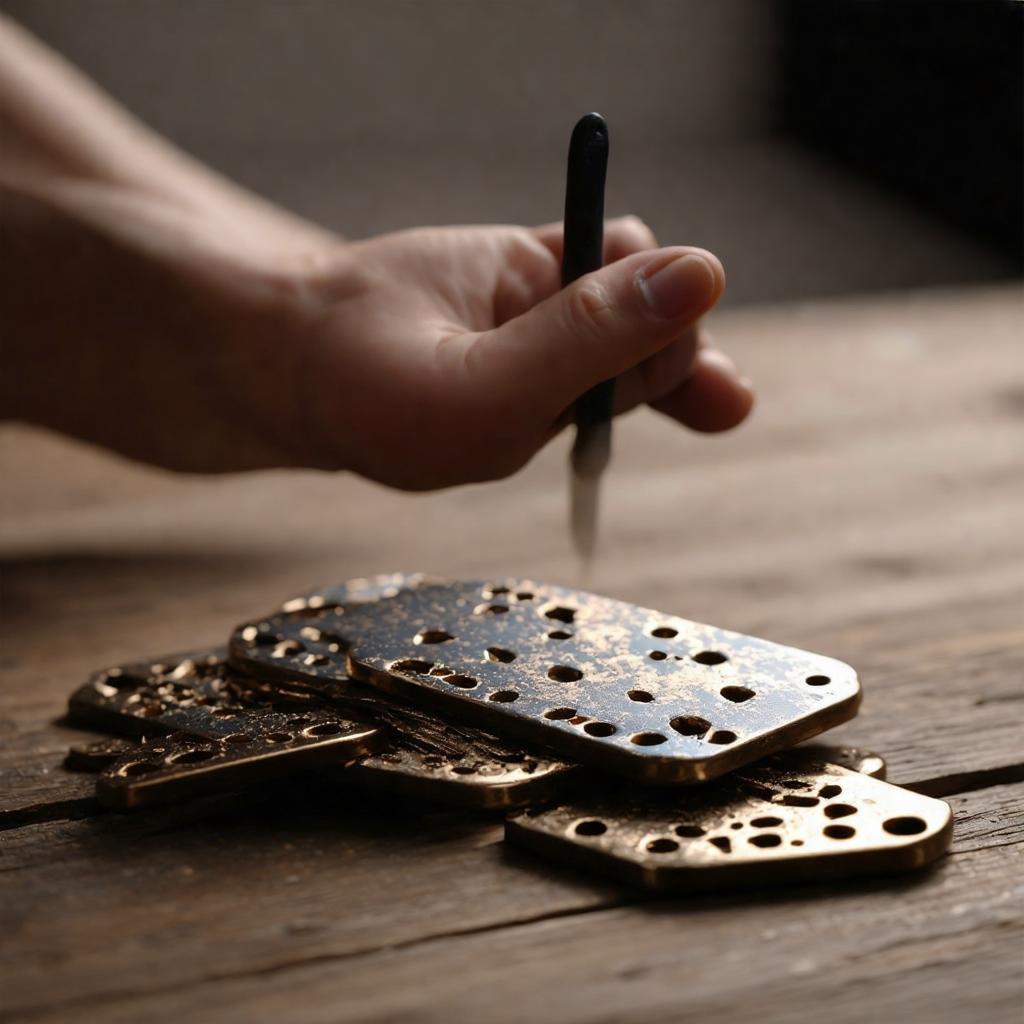
Custom dog tags have evolved far beyond their military origins to become versatile products serving identification, commemoration, fashion, and promotional purposes across countless industries. Understanding how dog tags are made reveals the precision metalworking, detailed craftsmanship, and quality control that separate premium manufacturing from inferior alternatives. Whether you are considering custom dog tags for a corporate program, retail product line, commemorative event, or personal project, this comprehensive guide explains the complete manufacturing process from material selection through finishing, while showing how Metal Crafts Pro delivers professional results at any scale.
Understanding Dog Tag Materials and Selection
The foundation of every quality dog tag is appropriate material selection. Different metals offer distinct combinations of durability, weight, appearance, and cost, making material choice one of the most consequential manufacturing decisions.
Stainless steel stands as the industry standard for durability and corrosion resistance. Grade 304 stainless steel offers excellent all-around performance for most applications, resisting rust, tarnish, and environmental degradation for years. For maritime or highly corrosive environments, grade 316 stainless steel provides enhanced resistance to saltwater and chemical exposure. Stainless steel accepts engraving beautifully, maintains structural integrity under stress, and delivers the classic dog tag appearance familiar worldwide.
Aluminum presents a lightweight, economical alternative particularly suited to large promotional runs and applications where minimizing weight matters. While softer than steel and more susceptible to scratching, anodized aluminum offers unique advantages including vibrant color integration through the anodizing process. Anodized tags resist corrosion effectively and can be produced in virtually any color, making them popular for branding applications requiring color matching.
Brass and copper bring warmth and character impossible with ferrous metals. These non-ferrous alloys develop natural patina over time, creating evolving appearance that many find appealing. They engrave with exceptional clarity, accept plating beautifully, and offer antimicrobial properties relevant to items worn against skin. Brass and copper suit fashion applications, commemorative pieces, and any project where distinctive coloration adds value.
Titanium occupies the premium tier, combining remarkable strength-to-weight ratio with complete hypoallergenic properties. Though expensive, titanium justifies its cost for medical alert tags, luxury fashion pieces, and applications where metal allergies concern end users.
The Stamping and Forming Process
Most dog tag production begins with metal forming, typically through stamping processes that efficiently create consistent shapes from sheet metal stock.
The process starts with a custom steel die engineered to cut the desired tag shape from metal sheets under tremendous pressure. This die, precision-machined to exact specifications, may also simultaneously form features like raised borders, recessed panels, or decorative textures. Setup requires significant expertise, as die alignment, pressure calibration, and material feed must be perfect to produce clean cuts without burrs or distortion.
During production, metal sheets feed into the stamping press where the die cuts individual tags with each press cycle. Modern progressive dies can perform multiple operations, cutting the outer shape, punching attachment holes, and adding surface features in a single pass through the machine. This efficiency makes stamping extraordinarily cost-effective for production runs of 1,000 pieces or more.
After cutting, tags undergo deburring to remove sharp edges created during stamping. Tumbling in abrasive media smooths edges uniformly while slightly work-hardening surfaces for improved durability. Tags destined for plating receive additional surface preparation including cleaning and activation to ensure proper coating adhesion.
Precision Engraving and Marking Techniques
The information or design on a dog tag requires permanent marking that withstands years of wear and environmental exposure. Multiple marking technologies serve this purpose, each with distinct advantages.
Rotary engraving uses carbide cutters physically removing material to create grooves. This traditional method produces deep, tactile marks with excellent durability. Rotary engraving works on virtually any metal and creates channels suitable for color filling. The physical cutting process limits fine detail capability compared to newer methods, but produces marks that endure virtually anything.
Laser engraving employs focused light beams vaporizing metal surface material with extraordinary precision. Computer control enables incredibly fine detail, complex graphics, and even photographic reproduction. Variable data capability means every tag in a production run can carry unique information without retooling. Laser marks are permanent and highly legible, though generally shallower than rotary cuts. Fiber lasers work best on metals, delivering crisp results on steel, aluminum, brass, and titanium.
Chemical etching uses acid-resistant masks and ferric chloride baths to dissolve unprotected metal areas. This method excels for intricate designs requiring uniform depth across complex patterns. Etching works particularly well on stainless steel and copper alloys, producing smooth, consistent marks without mechanical stress on the metal.
Diamond drag engraving scratches fine lines into metal surfaces using diamond-tipped styluses. This technique creates bright, reflective marks on darker metals without removing significant material. It works beautifully for fine text and delicate graphics on premium pieces.
Plating, Coating, and Surface Finishing
Raw metal surfaces often receive additional treatment to enhance appearance, durability, or specific functional properties.
Electroplating deposits thin metal layers onto base materials through electrochemical processes. Common plating options include gold, silver, nickel, rhodium, and black nickel, each creating distinct visual effects. Plating can transform inexpensive base metals into premium-appearing pieces, though plating durability depends on thickness and application quality. Properly executed plating lasts years under normal wear conditions.
Anodizing specifically applies to aluminum, creating a hard, porous oxide layer that can be dyed various colors before sealing. This electrochemical process integrates color into the metal surface rather than applying it superficially, producing exceptionally durable coloration resistant to scratching and fading. Type II anodizing suits decorative applications, while Type III hardcoat anodizing provides extreme wear resistance for demanding environments.
Powder coating applies dry polymer powder electrostatically before heat curing into a continuous protective film. This method offers excellent durability, chip resistance, and virtually unlimited color options. Powder-coated tags can withstand severe environmental exposure while maintaining vibrant appearance.
Epoxy doming applies clear polyurethane resin over printed or engraved surfaces, creating a lens-like magnifying effect that adds depth and protection. Domed coatings resist UV degradation, moisture, and abrasion while enhancing visual appeal through their glossy, three-dimensional appearance.
Color Filling and Decoration
Engraved areas often receive color filling to improve visibility and visual impact. This process applies specialized enamel paints or epoxy compounds into engraved grooves, with excess material wiped from surrounding surfaces. After curing, filled areas stand out clearly against base metal backgrounds.
Color matching capabilities enable precise brand color reproduction for corporate applications. Pantone matching ensures consistency across production runs and between different product types. Multiple colors can be filled in different areas of a single tag, though each additional color adds production complexity and cost.
Beyond filling, screen printing and pad printing apply color directly to metal surfaces. These methods enable full-color graphics, gradients, and photographic images impossible with engraving alone. Printed designs typically receive clear protective coating to ensure longevity.
Quality Control and Inspection
Rigorous quality control distinguishes professional manufacturing from amateur production. Systematic inspection protocols catch defects before tags reach customers, protecting both manufacturer reputation and client satisfaction.
Incoming material inspection verifies metal composition, gauge, and surface condition before production begins. Dimensional checks during setup ensure stamps, dies, and engraving equipment produce correct specifications. In-process sampling identifies drift before entire production runs deviate from standards.
Final inspection examines every tag or statistically significant samples from large production runs. Criteria include dimensional accuracy, engraving legibility and depth, plating uniformity, color accuracy, coating integrity, and overall cosmetic appearance. Defective pieces are segregated for rework or scrapping depending on defect severity.
Metal Crafts Pro maintains comprehensive quality documentation for every production batch, enabling traceability and continuous process improvement. This commitment to quality ensures clients receive exactly what they ordered, manufactured to precise specifications.
Packaging and Fulfillment Options
Finished dog tags require appropriate packaging for protection during transit and presentation upon delivery. Options range from economical bulk packaging to premium individual presentation.
- Bulk poly bags: Cost-effective protection for large distributor shipments
- Individual poly bags: Basic protection with individual separation
- Velvet pouches: Soft presentation enhancing perceived value
- Custom backing cards: Retail-ready packaging with branding and product information
- Gift boxes: Premium presentation for awards, commemoratives, and gifts
- Custom inserts: Foam or molded trays organizing multiple tags in presentation cases
Metal Crafts Pro offers flexible packaging solutions aligned with each client’s distribution strategy. Whether shipping bulk orders to warehouses or individual pieces direct to consumers, appropriate packaging ensures tags arrive pristine and present beautifully.
Ready to manufacture premium custom dog tags for your organization or product line? Metal Crafts Pro combines advanced manufacturing technology with decades of metalworking expertise to deliver exceptional dog tags at competitive prices. From material selection and design optimization through production, finishing, and packaging, we manage every step with precision and care. Our capabilities encompass stainless steel, aluminum, brass, copper, and titanium in any quantity from prototype samples to high-volume production runs. Contact Metal Crafts Pro today to discuss your custom dog tag requirements and receive a detailed manufacturing quote with no obligation.

