Every four years, the world watches as Olympic athletes stand atop podiums and receive medals symbolizing the pinnacle of athletic achievement. These gleaming discs of gold, silver, and bronze represent years of sacrifice, dedication, and excellence. But beneath the triumphant imagery lies a fascinating question that intrigues viewers and collectors alike: exactly how much gold is in an Olympic medal? The answer surprises many people and reveals a complex intersection of tradition, economics, and manufacturing standards governed by the International Olympic Committee. At Metal Crafts Pro, we specialize in metal craftsmanship including gold-plated awards and commemorative medallions, giving us deep insight into the specifications and production methods behind the world’s most famous medals.
IOC Requirements for Olympic Medal Composition
The International Olympic Committee maintains strict regulations regarding the composition of Olympic medals. These rules ensure consistency across host cities while allowing each Games to express unique cultural identity through design. Understanding the IOC specifications clarifies why modern Olympic gold medals contain far less gold than most people assume.
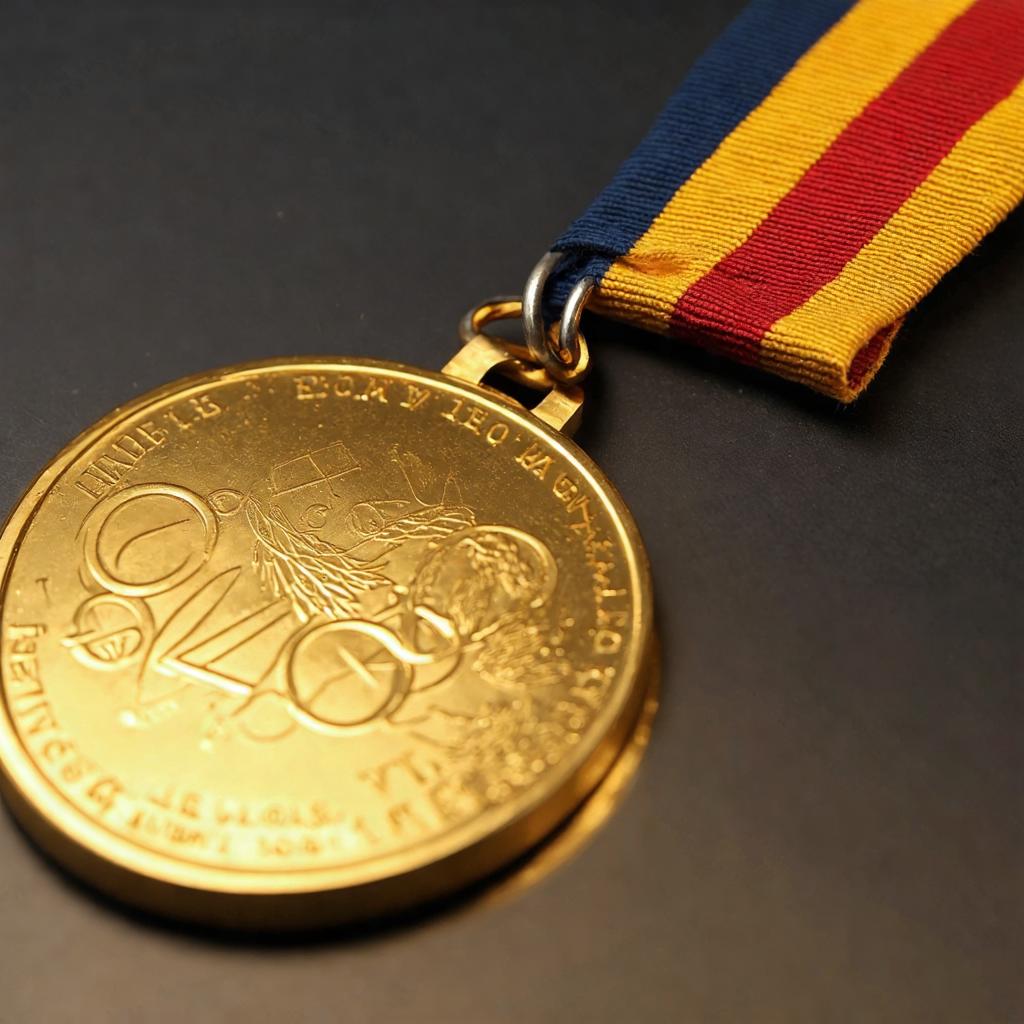
According to IOC rules, gold medals must contain a minimum of six grams of pure gold. This requirement has remained consistent for decades. However, the IOC does not mandate that gold medals be made entirely of solid gold. Instead, the six grams of gold is applied as plating over a base metal core, traditionally silver. This specification dates back to the early twentieth century when rising gold prices made solid gold medals economically impractical for host cities.
Silver medals must be composed of at least ninety-two point five percent pure silver, the standard known as sterling silver. Bronze medals are typically made from copper alloyed with tin and zinc, creating a durable and attractive reddish-brown metal. The size, thickness, and diameter of medals vary by host city within IOC guidelines, generally ranging from sixty to eighty-five millimeters in diameter and six to ten millimeters in thickness.
The Silver Base Beneath the Gold
The bulk of every Olympic gold medal is actually silver. The standard construction involves a solid silver disc, usually five hundred to five hundred fifty grams in total weight, which receives a thin layer of gold plating. This silver base provides the medal’s heft and structural integrity, while the gold layer delivers the iconic appearance.
The use of silver as a base metal makes practical and economic sense. Silver is significantly less expensive than gold but still a precious metal that provides substantial intrinsic value. A silver core gives medals satisfying weight and durability. Athletes often comment on how surprisingly heavy their medals feel when first lifted around their necks.
The gold plating process used for Olympic medals is highly sophisticated. Modern medals typically receive their gold layer through electrolytic plating, where the silver base is immersed in a gold solution and an electric current deposits gold atoms onto the surface. This method ensures uniform coverage, even on complex designs with raised and recessed areas. The thickness of the gold layer is carefully controlled to meet the six-gram minimum without wasting valuable material.
Breaking Down the Numbers
Let us examine the composition of a typical modern Olympic gold medal in detail. These numbers vary slightly between Games but follow a consistent pattern established by IOC guidelines.
- Total medal weight: Approximately five hundred fifty to five hundred eighty grams
- Gold content: Six grams of pure gold (minimum per IOC rules)
- Silver content: Approximately five hundred ten to five hundred forty grams of sterling silver
- Gold purity: The six grams must be at least nine-two point five percent pure gold
- Percentage of gold by weight: Approximately one to one point two percent of the total medal weight
These figures mean that an Olympic gold medal is roughly ninety-nine percent silver by weight. The gold component, while visually dominant and symbolically crucial, represents a tiny fraction of the medal’s physical mass. This reality often surprises casual observers who assume the name “gold medal” implies solid gold construction.
Melt Value vs Symbolic Value
The disparity between an Olympic gold medal’s melt value and its symbolic value is staggering. Using current precious metal prices, the raw materials in a gold medal are worth a few thousand dollars at most. The silver base might account for three to four hundred dollars, while six grams of gold adds approximately four to five hundred dollars depending on market fluctuations. Combined, the melt value of a gold medal typically falls in the range of one thousand to fifteen hundred dollars.
Compare this to the medal’s auction value when sold by famous athletes. Medals won by legendary competitors have fetched hundreds of thousands or even millions of dollars at auction. Jesse Owens’ 1936 Berlin Olympics gold medal sold for nearly one and a half million dollars in 2013. The symbolic value attached to the athlete’s achievement, the historical significance of the Games, and the rarity of the piece far exceed any intrinsic material worth.
This distinction between melt value and market value is important for understanding why the IOC specifies gold plating rather than solid gold. The medal’s worth comes from what it represents, not from the commodity value of its component metals. Host cities can produce thousands of medals without bankrupting their budgets, while athletes receive symbols of incalculable personal and historical significance.
Comparison Across Olympic Games
Different host cities have interpreted IOC guidelines with subtle variations, resulting in medals with different weights, sizes, and designs across Olympic history.
The London 2012 medals weighed four hundred grams, slightly lighter than many modern Games. The Rio 2016 medals were the heaviest in history at five hundred grams, made from recycled materials as part of the city’s sustainability initiatives. The recycled silver in Rio medals came from mirrors, solder, and X-ray plates, while the gold was extracted without using mercury, reducing environmental impact.
Tokyo 2020 continued the sustainability trend by producing medals entirely from recycled electronic waste. Japanese citizens donated millions of discarded smartphones and other devices, from which gold, silver, and copper were extracted. This innovative approach demonstrated how medal manufacturing can reflect contemporary values while still meeting IOC composition standards.
Paris 2024 introduced a striking design featuring a hexagonal piece of iron from the Eiffel Tower embedded in each medal, making every piece literally contain a fragment of French history. The iron component replaced a portion of the silver base while the gold plating specification remained unchanged.
The Manufacturing Process Behind Olympic Medals
Creating Olympic medals is one of the most prestigious assignments in the metalworking industry. Host cities commission renowned mints and metal artists to design and produce medals that will become treasured artifacts of sporting history.
The process begins years before the Games with a design competition. Artists submit concepts that must balance national identity with universal Olympic symbolism. The winning design is refined through multiple iterations before approval by the IOC and the host city’s organizing committee.
Once the design is finalized, steel dies are engraved with the medal artwork. These dies are used to strike blank metal discs under immense pressure, transferring the design in raised relief. For medals with complex textures or variable relief heights, multiple strikes may be required.
After striking, medals undergo surface finishing. Polishing removes tool marks and prepares the surface for plating. The gold plating process requires meticulous cleaning to ensure adhesion. Quality inspectors examine every medal for defects before presentation boxes are prepared.
Custom Gold-Plated Medals and Awards from Metal Crafts Pro
While Olympic medals represent the pinnacle of sports recognition, organizations of all sizes can create their own prestigious awards using similar manufacturing principles. Metal Crafts Pro produces custom gold-plated medallions, challenge coins, and recognition awards for corporations, military units, schools, and sports organizations.
Our gold-plating process mirrors the techniques used for Olympic medals, applying precisely controlled layers of pure gold over premium base metals. We offer various plating thicknesses and can achieve finishes ranging from bright polished gold to antique gold with subtle patina. Whether you need employee recognition awards, commemorative medallions for anniversaries, or custom coins for special events, our craftsmanship delivers results worthy of champions.
FAQ About Olympic Medal Gold Content
Why are Olympic gold medals not solid gold?
Solid gold medals would be prohibitively expensive given the size and quantity required. At current gold prices, a single solid gold medal would cost tens of thousands of dollars in materials alone. The IOC established the six-gram plating standard to balance tradition with practicality.
Has an Olympic gold medal ever been solid gold?
The 1912 Stockholm Games were the last to issue solid gold medals. After World War I, gold prices rose and the IOC adopted the current plating standard for the 1920 Antwerp Games.
How thick is the gold plating on an Olympic medal?
The plating thickness depends on the medal’s surface area but is generally measured in microns. Six grams of gold spread across a sixty to eighty-five millimeter disc results in a layer roughly ten to fifteen microns thick.
Can the gold plating wear off?
Under normal handling and display, gold plating on Olympic medals is quite durable. However, excessive polishing, abrasion, or chemical exposure could eventually wear through the layer. Most athletes store their medals in protective cases to preserve their condition.
Conclusion
The answer to how much gold is in an Olympic medal is six grams, plated over a solid silver base. While this represents only about one percent of the medal’s total weight, the symbolic value of an Olympic gold medal far transcends its material composition. These medals embody human achievement, national pride, and the timeless spirit of athletic competition.
If your organization seeks to create prestigious gold-plated awards, commemorative medallions, or custom challenge coins with Olympic-level craftsmanship, Metal Crafts Pro has the expertise and technology to deliver exceptional results. Contact our team today to discuss your project and Request a Free Quote for premium metal awards manufactured to the highest standards.
The Art of Olympic Medal Design
Olympic medal design represents a unique intersection of art, culture, and manufacturing. Host cities commission renowned artists to create pieces that capture national identity while honoring universal Olympic ideals. The obverse traditionally features Nike, the Greek goddess of victory, stepping out of the Panathenaic Stadium, a design established at the 1928 Amsterdam Games and used until 2004. Since 2004, host cities have designed custom obverses while maintaining symbolic continuity.
The reverse side offers creative freedom for host cities to express their cultural narrative. The London 2012 medals featured abstract geometric designs inspired by architectural lines. The Rio 2016 medals incorporated organic leaf and stone textures reflecting Brazilian nature. The Tokyo 2020 medals showcased intertwined swirls representing diversity and harmony. Each design must be translated from artistic concept to manufacturable reality, a process that often takes years and requires collaboration between artists, engineers, and metallurgists.
Preserving Olympic Medals for Generations
Olympic medalists face the challenge of preserving their awards for decades or centuries. Proper storage involves archival-quality materials, climate-controlled environments, and minimal handling. Many athletes keep medals in bank safe deposit boxes or museum-quality display cases with UV-protective glass. Regular inspection helps identify early signs of tarnishing or plating degradation.
Insuring Olympic medals requires specialized appraisals from experts in sports memorabilia. Standard insurance policies rarely cover items of such extraordinary value. Documentation including photographs, certificates, and provenance records supports both insurance claims and future resale if the athlete or their heirs ever choose to sell. Proper preservation ensures these symbols of human achievement remain intact for future generations to appreciate.
Comparing Olympic Medals to Other Major Awards
Olympic medals occupy a unique category in the world of awards, but comparing them to other major prizes highlights their distinctive characteristics. Nobel Prize medals, for example, are made of eighteen-karat green gold plated with twenty-four-karat gold, making them significantly more valuable in material terms than Olympic medals. Academy Awards, or Oscars, are made of britannium plated with gold, similar in construction to Olympic medals but smaller and lighter.
Military decorations like the Medal of Honor are typically made of brass with gold plating, following a construction philosophy similar to Olympic medals. The Victoria Cross, Britain’s highest military honor, is famously cast from bronze of Russian guns captured during the Crimean War, giving it a material history as compelling as any Olympic medal. These comparisons illustrate that prestigious awards consistently balance symbolic significance with practical material choices.