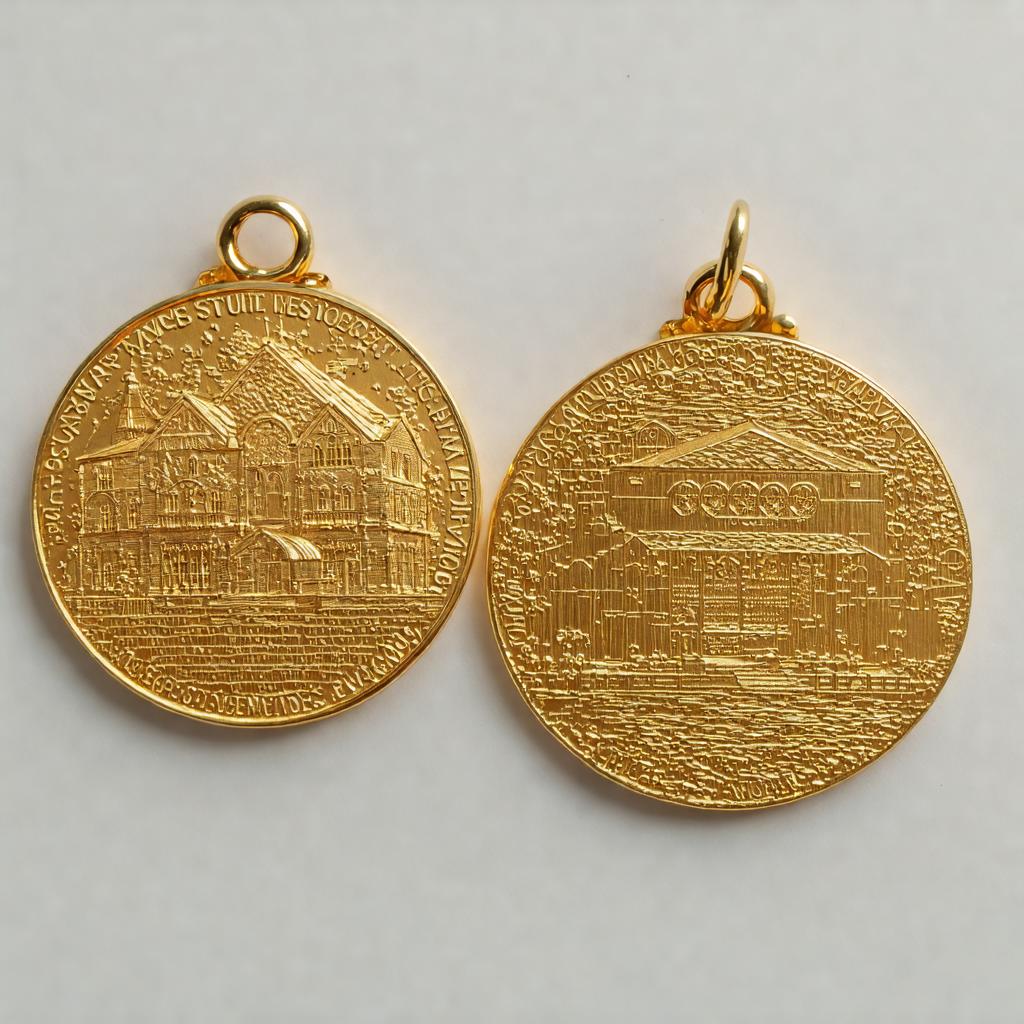
The Olympic Games captivate billions of viewers every four years, culminating in the iconic medal ceremonies where athletes receive gleaming gold, silver, and bronze discs. For many spectators, a pressing question arises as they watch champions bite their medals for photographers: are Olympic medals real gold? The short answer is both yes and no. While Olympic gold medals do contain genuine gold, they are not made of solid gold. Understanding the nuanced reality of Olympic medal composition requires exploring International Olympic Committee regulations, historical changes, manufacturing standards, and the practical economics of producing thousands of medals for a modern Games. At Metal Crafts Pro, we manufacture custom gold-plated awards and metal recognition pieces using similar techniques to those employed for Olympic medals, giving us expert insight into this fascinating topic.
The IOC Rules Governing Medal Composition
The International Olympic Committee exercises strict control over medal specifications through its charter and technical regulations. These rules ensure that medals from Athens to Tokyo to Paris maintain consistent standards while allowing host cities creative freedom in design.
For gold medals, the IOC mandates a minimum content of six grams of pure gold. This gold must be applied to the medal’s surface, typically through electroplating over a base metal core. The IOC does not require gold medals to be solid gold, and indeed no modern Games have produced solid gold medals since the 1912 Stockholm Olympics. The six-gram standard has remained consistent for over a century, providing a fixed benchmark that host cities must meet regardless of fluctuations in gold prices.
Silver medals must contain at least ninety-two point five percent pure silver, meeting the sterling silver standard. Bronze medals are typically manufactured from copper alloyed with tin and zinc, though the IOC allows some flexibility in the exact bronze alloy composition. All medals must be at least sixty millimeters in diameter and three millimeters thick, though most modern medals exceed these minimums.
The Reality: Silver Medals Painted Gold
A common but somewhat oversimplified way to describe modern Olympic gold medals is that they are essentially silver medals with a gold paint job. While this characterization is not entirely accurate, it captures the essential truth. The vast majority of an Olympic gold medal’s weight comes from silver, not gold.
A typical Olympic gold medal weighs approximately five hundred to five hundred fifty grams. Of this total, six grams are gold, while the remaining approximately five hundred grams are sterling silver. By weight, gold constitutes only about one to one point two percent of the medal. By volume, the gold plating layer is measured in microns, barely visible as a distinct layer when viewed in cross-section.
Does this mean the medals are fake or inauthentic? Absolutely not. The gold used is genuine, high-purity gold, typically nine-two point five percent pure or higher. The plating process creates a real gold surface that will not wear off under normal conditions. Athletes are genuinely receiving gold medals in the meaningful sense that the precious metal is present and visible. However, anyone expecting a solid gold disc the size of a hockey puck would be disappointed by the physical reality.
The Six-Gram Gold Plating Standard
The six-gram gold plating requirement deserves closer examination because it represents a fascinating compromise between tradition and pragmatism. When the modern Olympic Games began in 1896, gold medals were indeed made of solid gold. However, as the Games grew larger and gold prices rose, this practice became financially unsustainable.
The 1900 Paris Games used silver-gilt medals, essentially silver medals with a thin gold wash. By 1904 in St. Louis, gold medals had transitioned to the format we recognize today: primarily silver with gold plating. The 1912 Stockholm Games were the last to feature solid gold medals, and even those were smaller than modern medals. After World War I, the IOC formalized the six-gram standard, which has persisted ever since.
Six grams of gold was chosen because it provides adequate coverage for a medal-sized disc while keeping material costs manageable. At early twentieth-century gold prices, six grams represented a modest but respectable investment. Even today, with gold prices significantly higher, six grams per medal across roughly three hundred gold medals amounts to under two million dollars in gold, a manageable expense for multi-billion-dollar Olympic budgets.
Historical Changes in Olympic Medal Composition
The composition of Olympic medals has evolved considerably over the past century, reflecting changes in economics, manufacturing technology, and cultural values.
The 1896 Athens Games awarded silver medals to first-place finishers and copper medals to second place. Gold medals were not awarded at all, as gold was considered less prestigious than silver in Greek tradition. The 1900 Paris Games introduced gold medals but used silver-gilt rather than solid gold. By 1904, the familiar gold-silver-bronze hierarchy was established, though medal designs and compositions varied.
Through the early twentieth century, medal sizes gradually increased. The small, modest medals of the 1900s gave way to the larger, heavier medals common today. This size inflation increased material costs even as the gold content remained fixed at six grams, making solid gold construction ever more impractical.
In recent decades, sustainability has influenced medal composition. The Tokyo 2020 medals were manufactured entirely from recycled electronic waste, extracting gold, silver, and copper from donated smartphones and other devices. This marked the first time Olympic medals were produced from one hundred percent recycled sources. The Paris 2024 medals continued the sustainability focus while adding iron fragments from the Eiffel Tower, literally embedding French heritage into each piece.
Silver and Bronze Medal Specifications
While gold medals receive the most attention, the composition of silver and bronze medals is equally regulated and interesting.
Silver medals must meet the sterling silver standard of ninety-two point five percent purity. Unlike gold medals, which contain more silver than gold, silver medals are predominantly what their name suggests. A typical silver medal contains roughly five hundred grams of sterling silver, making its melt value primarily dependent on silver commodity prices. Some Games have produced pure silver medals, while others have used slightly lower purity alloys for durability.
Bronze medals are typically manufactured from red brass or gunmetal, alloys of copper with tin and zinc. The IOC does not specify exact bronze composition as strictly as gold and silver content, allowing manufacturers flexibility. Bronze medals are generally the heaviest of the three types due to copper’s density, though their material value is the lowest since copper is far less expensive than silver or gold.
Manufacturing Standards and Quality Control
If Olympic medals are not solid gold, how do manufacturers ensure they meet IOC standards? The answer lies in rigorous quality control and precise manufacturing techniques.
Gold plating for Olympic medals is typically applied through electrolytic deposition. The silver base is thoroughly cleaned and prepared, then immersed in a gold electrolyte solution. An electric current causes gold ions to bond with the silver surface, creating a uniform layer. The process is monitored to ensure the deposited gold mass reaches at least six grams.
After plating, medals undergo inspection using various methods. Weight verification confirms that the total mass falls within acceptable ranges. Visual inspection checks for plating uniformity, color consistency, and surface defects. Advanced testing such as X-ray fluorescence spectroscopy can non-destructively verify metal composition and plating thickness. Any medal failing these inspections is rejected and remade.
The result is a medal that, while not solid gold, meets every IOC requirement and delivers the iconic appearance that athletes and audiences expect. The gold surface is genuine, durable, and visually indistinguishable from solid gold in normal viewing conditions.
Custom Gold-Plated Products from Metal Crafts Pro
The same principles that govern Olympic medal production apply to custom awards and recognition pieces manufactured for organizations. At Metal Crafts Pro, we offer gold-plated challenge coins, medallions, and awards that combine genuine gold surfaces with practical, affordable base metals.
Our gold-plating services include:
- Standard gold plating: Bright, polished gold finish over brass or zinc alloy
- Antique gold plating: Weathered, vintage appearance with subtle darkening in recessed areas
- Dual-tone plating: Combinations of gold and silver or gold and black nickel for striking contrast
- Thick gold plating: Enhanced gold layer thickness for maximum durability and perceived value
These options allow organizations to create awards with the prestige of genuine gold while controlling costs through base metal selection and plating specifications. A gold-plated brass challenge coin delivers impressive visual impact and satisfying weight at a fraction of the cost of a solid gold piece.
FAQ About Olympic Medal Composition
When did Olympic medals stop being solid gold?
The 1912 Stockholm Games were the last to award solid gold medals. Starting with the 1920 Antwerp Games, the IOC standardized the current six-gram gold plating over silver.
Can you tell the difference between a plated gold medal and solid gold by appearance?
Under normal viewing conditions, no. High-quality gold plating looks identical to solid gold. Only destructive testing, precise weight measurements, or X-ray analysis can definitively distinguish plated from solid construction.
Why doesn’t the IOC require solid gold medals?
Solid gold medals would cost tens of thousands of dollars each in materials alone, making the medal program prohibitively expensive. The six-gram standard preserves tradition while remaining economically feasible.
Are the gold medals from ancient Olympics also not solid gold?
The ancient Olympic Games awarded olive wreaths, not metal medals. The gold medal tradition began with the modern Olympics in 1896.
Conclusion
So, are Olympic medals real gold? Yes, they contain genuine gold, specifically six grams of pure gold plating over a sterling silver base. No, they are not solid gold, and have not been since 1912. This composition represents a practical and elegant solution that honors tradition while acknowledging economic reality.
The six-gram standard has served the Olympic Movement for over a century, producing medals that athletes treasure and audiences admire. The gold is real, the achievement is real, and the symbolism is enduring.
For organizations seeking to capture similar prestige in their own awards and recognition programs, Metal Crafts Pro offers custom gold-plated products manufactured to the highest standards. From challenge coins to commemorative medallions, we deliver genuine gold finishes on premium base metals at practical price points. Contact us today to discuss your project and Get a Free Quote for custom gold-plated awards.
Cultural Significance of Gold in Awards
Gold has been humanity’s most prized metal for millennia, associated with gods, kings, and divine authority across virtually every civilization. Ancient Egyptians filled pharaohs’ tombs with gold artifacts. Medieval European monarchs wore gold crowns. Eastern cultures used gold leaf to adorn temples and sacred texts. This deep cultural programming explains why gold medals, even when primarily silver, retain unmatched prestige in the collective human consciousness.
The psychological impact of gold extends beyond material worth. Studies in behavioral economics show that people perceive gold-colored awards as more valuable than identical awards in other colors. The mere association with gold triggers responses linked to wealth, achievement, and status. This is why organizations continue to use gold plating for their highest honors, even when more economical alternatives exist. The IOC’s six-gram standard preserves this powerful symbolism while acknowledging practical constraints.
How to Verify Gold Plating Quality
Organizations commissioning gold-plated awards should understand how to verify plating quality. Reputable manufacturers provide specifications including gold purity, plating thickness, and base metal composition. Independent testing laboratories can verify these claims using X-ray fluorescence spectroscopy, a non-destructive method that analyzes surface composition with high accuracy.
Visual inspection also reveals plating quality. High-quality gold plating appears uniform in color, free from blotches, streaks, or thin spots at edges and raised details. The finish should resist minor scratching without exposing base metal. Over time, quality plating maintains its luster, while inferior plating tarnishes, discolors, or wears through. Working with established manufacturers like Metal Crafts Pro ensures that your gold-plated awards meet exacting standards.
The Engineering Behind Six Grams of Gold
Achieving precisely six grams of gold plating on a medal-sized disc requires sophisticated engineering. Electroplating baths must maintain exact chemical composition, temperature, and current density. The silver base must be perfectly clean and prepared to ensure gold adhesion. Any contamination or process variation results in uneven plating, discoloration, or insufficient gold deposition.
Quality control laboratories use gravimetric analysis and X-ray fluorescence to verify that each medal meets the six-gram minimum. Some manufacturers slightly exceed the minimum to ensure compliance even if minor variations occur. This engineering precision explains why Olympic medals cost significantly more than simple gold-plated jewelry, despite containing similar amounts of precious metal.