When athletes stand on the Olympic podium and receive a gold medal, the world sees a symbol of ultimate achievement. But behind the glory and emotion lies a practical question that collectors, historians, and curious fans alike often ask: how much is a Olympic gold medal worth? The answer is more complex than you might expect. While these medals carry immeasurable sentimental value for the athletes who earn them, they also have a tangible monetary worth determined by materials, rarity, historical significance, and market demand. In this comprehensive guide, we break down the true value of an Olympic gold medal in 2026 and explore how modern medal manufacturing delivers the same level of prestige for custom awards.
How Much Is an Olympic Gold Medal Worth in 2026?
The value of an Olympic gold medal can be examined from two distinct perspectives: its intrinsic melt value based on raw materials, and its market value when sold at auction or to private collectors. Understanding both dimensions helps answer the question of how much is a Olympic gold medal worth with the nuance it deserves.
The Melt Value vs. the Emotional Value
Contrary to popular belief, modern Olympic gold medals are not crafted from solid gold. Since 1912, the International Olympic Committee (IOC) has mandated that gold medals must contain a minimum of 92.5% silver and at least 6 grams of pure gold plating. The remaining composition typically includes copper and other alloys for durability. As of 2026, with silver trading at approximately $30 per troy ounce and gold near $2,000 per troy ounce, the melt value of a standard Olympic gold medal falls between $750 and $950. This figure fluctuates daily based on precious metal spot prices.
However, the emotional and historical value of these medals far exceeds their material composition. For an athlete who has trained for decades, sacrificed personal relationships, and pushed their body to absolute limits, that medal represents the culmination of a lifetime dream. It is a tangible piece of immortality, a testament to being the best in the world at a given moment in time. This intangible worth is truly priceless.
What Are Olympic Gold Medals Made Of?
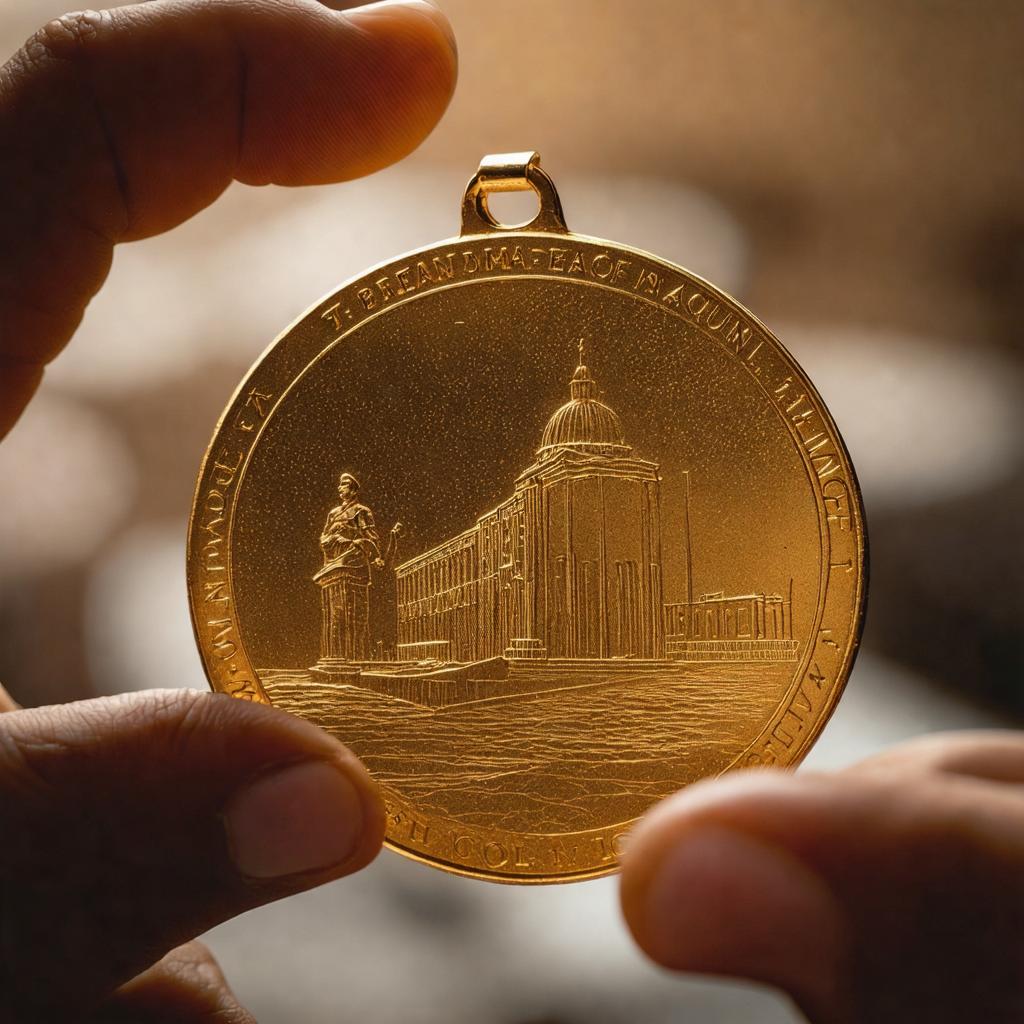
To fully understand how much is a Olympic gold medal worth, it is essential to examine what goes into manufacturing one. Each medal begins with a high-purity silver core, usually measuring between 85 and 100 millimeters in diameter and approximately 6 to 10 millimeters in thickness, depending on the host city’s design specifications. The silver core is then electroplated with a precisely measured layer of 24-karat gold.
The host city of each Olympic Games designs its own medals, meaning no two Games produce identical awards. For example, the Tokyo 2020 medals were notable for being crafted from recycled electronic waste, including donated smartphones and laptops. This sustainable approach added a unique story to each medal’s provenance while maintaining strict adherence to IOC material standards. The Paris 2024 medals featured an innovative design incorporating a hexagonal piece of iron from the Eiffel Tower, further demonstrating how host cities infuse local heritage into their medal designs.
Breaking Down the Materials and Manufacturing Process
Olympic medal manufacturing represents one of the highest standards in the awards industry. The process involves sophisticated metallurgy, precision engineering, and artisan-level finishing that few facilities worldwide can replicate. At Metal Crafts Pro, we apply these same rigorous standards to every custom medal we produce for corporate events, athletic competitions, military ceremonies, and commemorative occasions.
Why Aren’t Olympic Gold Medals Solid Gold?
The transition away from solid gold medals after the 1912 Stockholm Games was driven by several practical considerations. First, the cost of producing 300-plus solid gold medals every four years became prohibitively expensive as the Games expanded. Second, pure gold is an exceptionally soft metal, scoring only 2.5 on the Mohs hardness scale. A solid gold medal would scratch, dent, and deform with normal handling, making it unsuitable for an object meant to be worn, displayed, and treasured for generations.
By using a sterling silver base with strategic gold plating, Olympic organizers achieve the best of both worlds: the prestigious appearance of gold combined with the structural integrity and affordability of silver. This same engineering philosophy guides our approach at Metal Crafts Pro, where we help clients select optimal material combinations for their specific use cases and budgets.
The Intricate Production Process
Manufacturing an Olympic-caliber medal involves multiple stages of production, each requiring specialized expertise:
- Design and Sculpting: Artists create detailed digital models and physical sculptures of the medal design, often taking six to twelve months to perfect every contour and relief.
- Die Creation: Master dies are machined from hardened steel using CNC milling and hand-finishing techniques to capture microscopic details.
- Striking or Casting: Medals are either struck under immense hydraulic pressure or investment cast, depending on the complexity of the design and the desired surface texture.
- Plating and Finishing: Multi-stage electroplating processes apply the gold layer with precise thickness control, followed by protective lacquering, edge finishing, and quality inspection.
- Quality Assurance: Each medal undergoes dimensional verification, weight checking, visual inspection, and sometimes X-ray fluorescence analysis to confirm material composition.
This level of quality control ensures that every medal meets the exacting standards expected by the world’s greatest athletes. Metal Crafts Pro implements comparable quality protocols across our production lines, delivering museum-grade custom medals to clients in sports, education, government, and private enterprise.
Auction Prices: What Collectors Actually Pay
While melt value provides a baseline, the open market often tells a very different story about how much is a Olympic gold medal worth. When Olympic gold medals appear at prestigious auction houses such as Christie’s, Sotheby’s, or Heritage Auctions, bidding frequently soars well beyond intrinsic material value.
Several factors drive these remarkable prices:
- Athlete Provenance: Medals won by legendary athletes command the highest premiums. Jesse Owens’ 1936 Berlin Olympics gold medal sold for approximately $1.47 million in 2013, while Mark Wells’ 1980 “Miracle on Ice” hockey gold medal fetched $310,700 in 2010.
- Historical Significance: Medals from historically notable Games, such as the 1936 Berlin Olympics or the 1980 Lake Placid Winter Games, carry narrative value that amplifies collector interest.
- Condition and Documentation: Medals preserved in mint condition with original presentation boxes, certificates, and provenance documentation achieve significantly higher prices than those with wear or uncertain history.
- Rarity: Medals from discontinued sports, boycotted Games, or events with few participants can be exceptionally scarce, driving competitive bidding.
Even medals won by lesser-known athletes typically sell for $20,000 to $50,000 at auction, demonstrating that the Olympic brand and the story behind each medal contribute far more to value than the underlying metals. This premium is a powerful reminder that exceptional craftsmanship and meaningful narrative transform ordinary objects into extraordinary treasures.
Custom Medal Manufacturing: Bringing Olympic-Level Quality to Your Event
Understanding how much is a Olympic gold medal worth inevitably leads to an appreciation for the craftsmanship involved in creating such prestigious awards. At Metal Crafts Pro, we channel that same dedication to excellence into every custom medal and award we manufacture for our B2B clients worldwide.
Materials That Match the Prestige
We offer a comprehensive range of material options to match the significance of your event or recognition program:
- Zinc Alloy: Ideal for complex 3D designs and detailed relief work, offering excellent value without sacrificing visual impact.
- Brass and Bronze: Premium base metals that provide substantial weight, warm natural coloration, and outstanding durability.
- Copper: A distinctive choice with natural antimicrobial properties and a rich reddish hue that ages beautifully.
- Iron: Cost-effective for large-quantity orders, with excellent magnetic properties and a substantial feel.
- Gold, Silver, and Nickel Plating: Precious and semi-precious metal finishes applied through advanced electroplating to achieve Olympic-level luster and prestige.
Whether you need 50 medals for a regional academic decathlon or 5,000 for a multinational corporate wellness challenge, our engineering team optimizes material selection to balance aesthetics, durability, and budget.
Design and Craftsmanship Standards
Our manufacturing facility employs state-of-the-art die-casting, stamping, and CNC engraving equipment alongside traditional hand-finishing techniques. This hybrid approach allows us to produce medals ranging from classic circular designs to complex custom shapes with cutouts, translucent enamel fills, spinning elements, and integrated LED lighting.
Every project begins with a collaborative design consultation where our specialists translate your vision into production-ready artwork. We provide physical prototypes for approval before full-scale manufacturing begins, ensuring that the final product exceeds your expectations. Our quality assurance team inspects each medal for dimensional accuracy, surface finish, plating uniformity, and structural integrity before shipment.
If you are planning an awards ceremony, athletic competition, military commemoration, or corporate recognition event, request a custom quote from Metal Crafts Pro and discover how Olympic-level craftsmanship can elevate your program.
Frequently Asked Questions
How much is a Olympic gold medal worth in raw materials?
The melt value of a modern Olympic gold medal typically ranges from $750 to $950, depending on current silver and gold market prices. The medal contains at least 92.5% silver and a minimum of 6 grams of pure gold plating.
Has an Olympic gold medal ever sold for over $1 million?
Yes. Jesse Owens’ 1936 Berlin Olympics gold medal sold for approximately $1.47 million in 2013, setting a record for Olympic memorabilia. Medals associated with historically significant athletes and events command the highest prices.
Why did the Olympics stop using solid gold medals?
The IOC discontinued solid gold medals after the 1912 Stockholm Games due to the prohibitive cost of gold and the metal’s inherent softness, which made medals susceptible to damage during normal handling and wear.
Can I buy an authentic Olympic gold medal?
Authentic Olympic gold medals occasionally appear at major auction houses and through private sales. However, they are rare and expensive. Most organizations seeking prestigious awards opt for custom-manufactured medals that capture the same aesthetic and symbolic power.
What plating options does Metal Crafts Pro offer for custom medals?
We offer gold plating, silver plating, nickel plating, black nickel, antique bronze, antique copper, antique silver, and dual-plating combinations. Our precious metal plating meets jewelry-grade standards for luster and durability.
Conclusion: Beyond the Price Tag
So, how much is a Olympic gold medal worth? The answer depends on whether you measure in troy ounces or in human ambition. By raw materials, a modern gold medal is worth roughly $750 to $950. At auction, that same medal might sell for anywhere from $20,000 to well over $1 million. Yet for the athlete who earned it through decades of sacrifice, its value is simply incalculable.
The enduring lesson of Olympic medal valuation is that exceptional craftsmanship, meaningful narrative, and symbolic significance transform metal into treasure. At Metal Crafts Pro, we bring that same transformative philosophy to every custom medal, challenge coin, lapel pin, and commemorative piece we manufacture. Our clients understand that the awards they present represent far more than recognition, they represent stories, values, and aspirations.
Whether you are organizing an international sporting competition, a military recognition ceremony, or a corporate milestone celebration, the quality of your awards communicates the importance of the achievement being honored. Partner with Metal Crafts Pro to ensure that every recipient feels the weight of greatness in their hands. Contact us today for a free design consultation and quote, and let us help you create awards worthy of champions.