Every four years, billions of people around the world watch in awe as Olympic champions mount the podium and receive their gleaming gold medals. The visual is iconic: athletes biting their medals, photographers capturing the golden shimmer, and nations celebrating the achievement. Yet beneath this gleaming surface lies a surprising truth that sparks endless debate and curiosity. Are Olympic gold medals solid gold? The short answer is no, but the full explanation involves fascinating materials science, historical evolution, and sophisticated manufacturing techniques that transform humble metals into symbols of global excellence. In this comprehensive exploration, we dissect the composition of Olympic gold medals, explain why solid gold gave way to smarter engineering, and reveal how Metal Crafts Pro applies these same principles to manufacture premium custom medals for organizations worldwide.
Are Olympic Gold Medals Solid Gold? The Short Answer
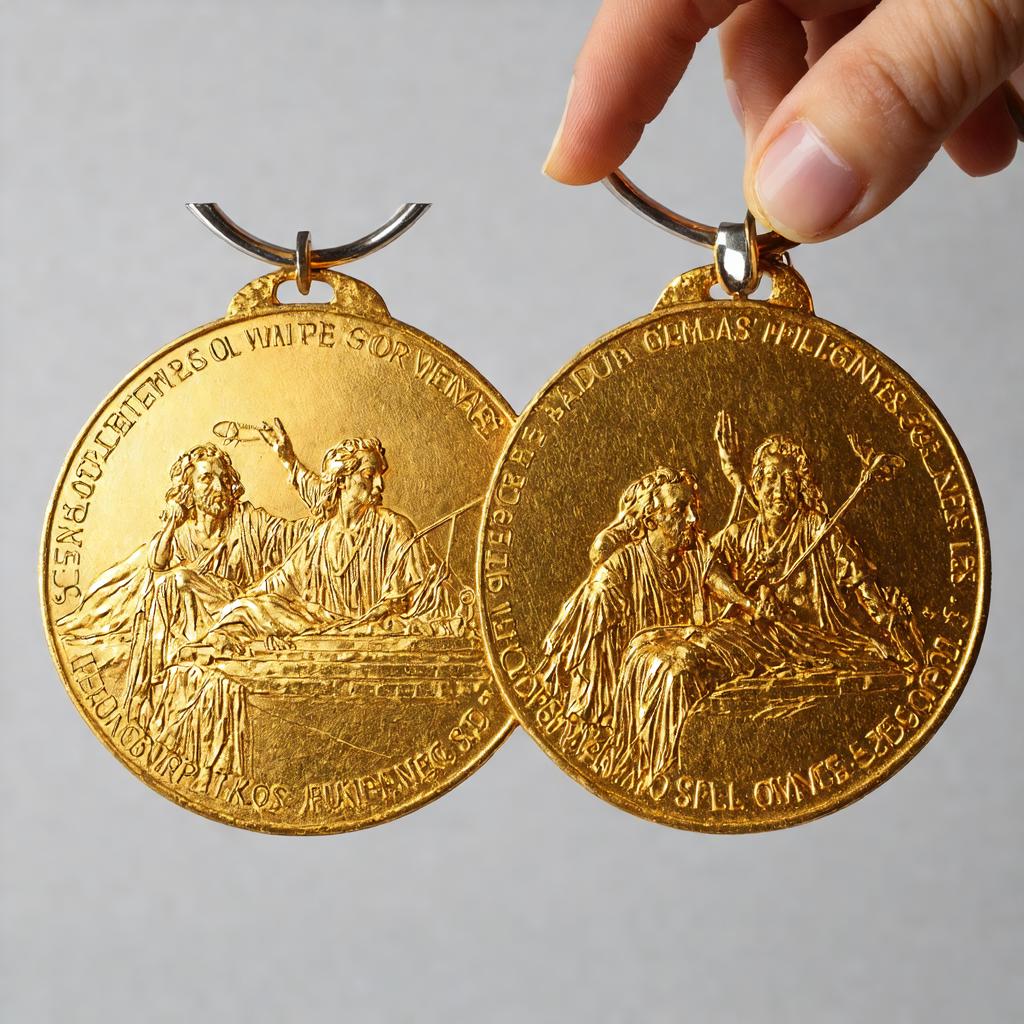
No, modern Olympic gold medals are not solid gold. Since the 1920 Antwerp Games, the International Olympic Committee has required that gold medals contain a minimum of 92.5% silver and at least 6 grams of pure gold. The medal is essentially a sterling silver disc plated with a thin but precisely specified layer of 24-karat gold. This composition delivers the prestigious golden appearance that the world associates with Olympic victory while addressing practical concerns of cost, durability, and weight.
However, this was not always the case. From 1904 through 1912, Olympic gold medals were indeed crafted from solid gold, typically containing between 21 and 24 grams of the precious metal depending on the specific Games. The transition away from solid gold represents one of the most significant changes in Olympic tradition, driven by economic realities and advances in materials engineering.
The Exact Composition of Modern Olympic Gold Medals
To fully answer are Olympic gold medals solid gold, we must examine the precise specifications that govern their manufacture. The IOC’s technical regulations leave no room for interpretation, ensuring consistency and fairness across all Olympic Games.
Silver Base with Gold Plating
The foundation of every modern Olympic gold medal is a high-purity silver disc. The IOC mandates that this base must be at least 92.5% pure silver, the standard known as sterling silver. In practice, most host cities use silver of even higher purity, often 99.9% fine silver, to maximize the medal’s luster and minimize tarnishing.
On top of this silver core, manufacturers deposit a layer of pure gold through electroplating. The regulations specify a minimum of 6 grams of gold, though some host cities have exceeded this minimum. To put this in perspective, 6 grams represents approximately 0.19 troy ounces of gold. At 2026 gold prices, this layer alone contributes roughly $380 to the medal’s material value.
The remaining fraction of the medal, typically 1% to 2% of total mass, consists of alloying metals added to the silver base for structural reinforcement. Copper is the most common additive, improving hardness and resistance to deformation without significantly compromising the silver’s natural brightness.
IOC Regulations and Standards
The International Olympic Committee maintains strict technical standards for medal manufacturing, outlined in the Host City Contract and accompanying technical manuals. These regulations cover:
- Minimum Diameter and Thickness: Gold medals must measure at least 60 millimeters in diameter and 3 millimeters in thickness, though most host cities exceed these minimums substantially.
- Weight Requirements: While no maximum weight is specified, medals typically weigh between 500 and 600 grams, giving them substantial heft that feels significant in the recipient’s hands.
- Material Verification: Host cities must provide certification of material composition, often verified by independent metallurgical laboratories using X-ray fluorescence spectroscopy or fire assay techniques.
- Design Uniqueness: Each host city creates a distinctive design, but the obverse must incorporate traditional Olympic iconography, including the goddess Nike and the Panathinaiko Stadium.
These rigorous standards ensure that every Olympic gold medal meets a baseline of quality and authenticity, regardless of which nation hosts the Games.
Why Solid Gold Medals Became Impractical
The shift from solid gold to silver-gold composite medals was not a decision made lightly. Multiple converging factors rendered the traditional approach unsustainable, and understanding these factors illuminates why modern medal manufacturing follows the protocols it does.
Cost and Weight Considerations
In 1912, when the last solid gold medals were awarded, the Olympic Games featured approximately 2,400 athletes competing across 102 events. Even at this relatively modest scale, producing hundreds of solid gold medals represented a significant expense. By the 1920s, the Games were expanding rapidly, and gold prices had risen substantially due to wartime economic disruption.
Today, with over 300 events across Summer and Winter Games and more than 1,000 gold medals awarded per Olympiad, solid gold production would cost tens of millions of dollars in materials alone. At current gold prices exceeding $2,000 per troy ounce, a single 500-gram solid gold medal would contain over $32,000 worth of gold. Producing 1,000 such medals would require more than $32 million in gold bullion, an expenditure that would divert enormous resources from athlete support, venue construction, and sporting development programs.
Durability and Wear Resistance
Beyond cost, pure gold presents significant physical challenges for objects designed to be handled, worn, and displayed. Gold ranks 2.5 on the Mohs hardness scale, making it softer than a human fingernail. A solid gold medal would scratch easily, dent from minor impacts, and deform under the pressure of a celebratory bite, the famous athlete tradition that photographers eagerly capture.
Sterling silver, by contrast, ranks approximately 2.5 to 3 on the Mohs scale but gains considerable hardness when alloyed with copper. The resulting composite structure, further strengthened by the gold plating layer, produces a medal that can withstand decades of handling while maintaining its pristine appearance. This durability is essential for an object intended to become a family heirloom passed down through generations.
The Science Behind Gold Plating and Gilding
The transformation of a silver disc into a golden medal involves sophisticated electrochemical processes that illustrate the remarkable capabilities of modern materials science.
Electroplating Techniques
Gold plating for Olympic medals typically employs electrolytic deposition, a process that uses electrical current to reduce dissolved gold ions onto the silver substrate. The medal serves as the cathode in an electrolytic cell filled with a solution containing gold salts, typically potassium gold cyanide. When direct current flows through the cell, gold ions migrate to the medal surface and deposit as a uniform metallic layer.
Advanced plating systems utilize pulse plating or reverse pulse plating techniques, where the current direction periodically reverses. These methods produce finer grain structures, improved adhesion, and more uniform thickness distribution across complex three-dimensional surfaces. For medals with intricate relief designs, pulse plating ensures that recessed areas receive adequate gold coverage without excessive buildup on raised features.
The thickness of Olympic gold plating, while not publicly specified beyond the 6-gram minimum, is estimated to range from 3 to 6 microns depending on the host city’s specifications. This thickness provides adequate wear resistance for normal handling while conserving gold resources.
Vermeil vs. Standard Gold Plating
Technically, Olympic gold medals could be classified as vermeil, a term referring to sterling silver plated with gold of at least 10 karats and at least 2.5 microns thick. However, Olympic plating standards substantially exceed minimum vermeil requirements in both gold purity and thickness, placing these medals in a premium category of gilded objects.
The distinction matters because vermeil and high-quality gold plating offer the visual and tactile experience of solid gold at a fraction of the cost. This same value proposition drives the custom medal industry, where organizations can achieve prestigious golden awards without the prohibitive expense of precious metal construction.
Custom Medal Manufacturing: Achieving Premium Quality
At Metal Crafts Pro, we apply the same materials science principles that govern Olympic medal production to create custom awards for our B2B clients. Whether you need medals for athletic tournaments, academic competitions, corporate recognition programs, or military ceremonies, our engineering team optimizes material selection and finishing processes to deliver Olympic-level quality.
Our manufacturing capabilities include:
- Precious Metal Plating: Gold, silver, and rose gold plating applied through controlled electrolytic processes with documented thickness verification.
- Premium Base Metals: Brass, bronze, zinc alloy, and copper substrates selected for optimal weight, machinability, and corrosion resistance.
- Hard Enamel and Soft Enamel: Vibrant color infusions using vitreous enamel or synthetic resin enamels that replicate the rich color saturation of traditional cloisonné.
- 3D Die Casting and CNC Machining: Complex relief sculptures, undercuts, and dimensional details achievable through advanced tooling and casting techniques.
- Protective Overcoats: Transparent epoxy domes or nano-ceramic clear coats that protect plating and enamel from oxidation, abrasion, and UV degradation.
Every custom medal project begins with material science consultation. We analyze your design requirements, budget parameters, intended use environment, and durability expectations to recommend the optimal combination of base metal, plating, and protective finishes. Our goal is to ensure that your awards look as magnificent on their hundredth anniversary as they do on presentation day.
Ready to create awards that embody the same scientific excellence as Olympic gold medals? Request your free custom medal quote from Metal Crafts Pro and let our engineering team design the perfect solution for your organization.
Frequently Asked Questions
Are Olympic gold medals solid gold or just plated?
Modern Olympic gold medals are not solid gold. They are made primarily of sterling silver (minimum 92.5% silver) with a plating of at least 6 grams of pure gold. The last solid gold Olympic medals were awarded at the 1912 Stockholm Games.
How much gold is actually in an Olympic gold medal?
An Olympic gold medal contains a minimum of 6 grams of pure gold as plating over a silver base. At current market prices, this gold content is worth approximately $380 to $400, while the total medal melt value ranges from $750 to $950.
Why don’t they make Olympic medals out of solid gold anymore?
Solid gold medals were discontinued after 1912 due to the prohibitive cost of gold and the metal’s physical softness, which makes it prone to scratching, denting, and deformation. The current silver-and-plating standard provides durability and affordability while maintaining a prestigious golden appearance.
What is the difference between gold plating and gold vermeil?
Vermeil specifically refers to sterling silver plated with gold of at least 10 karats and a minimum thickness of 2.5 microns. Gold plating is a broader term that can apply to any base metal with a gold surface layer. Olympic medals exceed vermeil standards in both gold purity and thickness.
Can Metal Crafts Pro make medals that look like Olympic gold medals?
Yes. We regularly produce custom medals with gold plating over silver or brass bases, achieving the same warm golden luster and substantial weight associated with Olympic awards. Our design team can also incorporate high-relief sculpting, custom edges, and personalized ribbon assemblies to match your vision.
Conclusion: The Golden Truth
Are Olympic gold medals solid gold? No, they are masterfully engineered composites of sterling silver and electroplated gold, a solution born from economic necessity and refined by materials science. Yet this practical reality in no way diminishes their symbolism. The golden surface still represents the pinnacle of human athletic achievement, and the silver core provides a foundation of strength and permanence that pure gold could never match.
The evolution of Olympic medal manufacturing offers a powerful lesson for any organization that presents awards: the most meaningful honors combine beautiful appearance with intelligent engineering and enduring construction. At Metal Crafts Pro, we have built our reputation on exactly this philosophy. Our custom medals, challenge coins, lapel pins, and commemorative pieces honor recipients with the same attention to materials science and craftsmanship that the IOC demands for its champions.
Whether you are recognizing sales excellence, academic achievement, athletic victory, or years of dedicated service, the awards you present should reflect the significance of the accomplishment. Partner with Metal Crafts Pro to ensure your medals meet the highest standards of quality, durability, and visual impact. Contact us today for a complimentary design consultation and quote, and let us help you create awards as enduring as the memories they celebrate.